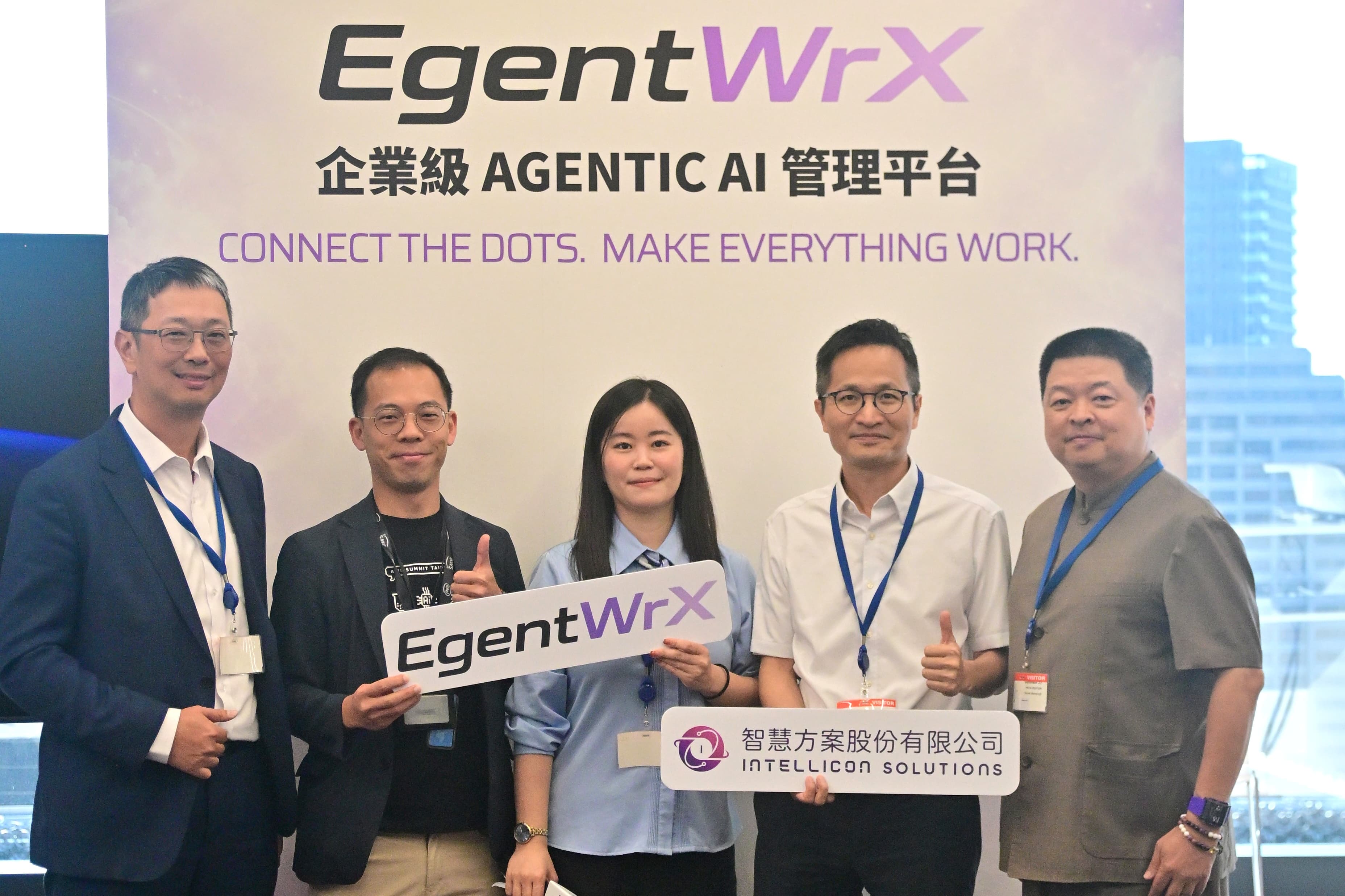
The 186th Meet Startup gathering, themed “What Exactly Is an AI-Native Company?”, brought together Tseng Ming-hsien, former Chief AI Officer at USPACE and Dean of the AI Academy at SAT. KNOWLEDGE; Albert Chen, CEO of Intellicon Solutions; Lman Chu, Co-founder and COO of IrisGo.AI; and Chiu Pei-cheng, Product Lead at GNTC. Tseng Ling-huai, who leads startup coverage at Meet Startup, compiled the discussion into an article titled “Four Startups Examine Goals, Organizational Processes, and Individual Ways of Working: What Exactly Is an AI-Native Company?”
The article opens with a familiar scene: a company gives everyone a ChatGPT account, employees enjoy using it, and efficiency improves by 30 to 50 percent, yet costs do not decrease at all. Chiu Pei-cheng said this is the stage at which most companies mistakenly believe they have already integrated AI into their operations. The four speakers approached the question from different perspectives, but their answers shared common ground.
Products: Users Define the Goals, and AI Agent Handles the Execution
Traditional software encodes workflows in code, using conditions and scripts to handle predefined scenarios. Real-world inputs, however, often contain exceptions.
Intellicon Solutions primarily serves manufacturing clients. Albert Chen cited a manufacturing client with annual revenue of NT$30 billion that receives overseas orders every day by email with PDF attachments. Each customer uses a different format, requiring employees to spend two to three hours manually copying and pasting information into Excel. Hard-coded rules stop working as soon as the format changes; writing extensive custom code for a single customer's workflow creates problems for subsequent scaling and maintenance.
In his view, accepting customization requests in the AI era is where the trouble begins: large language models undergo major updates every few months, and every customization commitment creates another maintenance obligation with each subsequent update. To build AI products, companies need to build standardized products.
AI-native products reverse the sequence: users define only the goal, such as processing a batch of orders or launching a marketing campaign, while an AI Agent or multiple models dynamically determine the execution details. They can interpret unfamiliar formats themselves without requiring changes to the rules. At client sites, Albert Chen uses five questions to break down a task:
- Whose problem is this task intended to solve, and what is that problem?
- Where does the data come from?
- Who needs to see the results?
- What steps can the work be broken down into?
- Which documents or rules should guide its execution?
Once these five questions have been answered, the result is a goal an AI Agent can work with.
Chiu Pei-cheng also observed that the unit of instruction people give AI is becoming larger. In 2022 and 2023, people competed to write longer prompts, with words and sentences as the unit. When MCP emerged in late 2024, people began teaching AI to follow workflows step by step. The unit became steps, but people were still directing the process. Only in the past few months has the unit become goals, and only then have the benefits of enterprise AI adoption truly begun to emerge.
Organizations: Documenting the Decision Criteria in Employees' Heads
Changing organizational processes is harder than changing products because it affects familiar ways of working. Chiu Pei-cheng said the most typical failure is to give everyone a powerful tool within an existing process, changing what happens inside each stage without changing how the stages connect. In software development, for example, the process runs from ideation and requirements documentation to design, development, and testing. Any change at one stage requires everyone to meet again to realign.
GNTC's approach is to condense this chain into an AI Agent production line. Chiu Pei-cheng used a kitchen analogy: a renowned chef can make excellent dishes, but output has a limit. Standardization and scaling require a production line, and a prerequisite for that production line is for everyone to first document their craft. Both startups and the clients they serve need to extract their decision criteria so that AI has a basis for execution.
He cited Dcard, which belongs to the same group as GNTC and already has more than 700 AI Agent instances, over 100 of which are shared company-wide. A sales proposal AI Agent allows salespeople to enter a client's name and a proposed angle, then automatically gathers internal and external information and produces presentations and interactive prototypes, reducing preparation time from half a day to 30 minutes. The planning team that previously made presentations for salespeople every day now works on continuously improving this production line.
Tseng Ming-hsien cautioned that most decision criteria reside in employees' heads. To make people willing to share them, they first need to feel secure, so KPIs should not be set too early. If they are, employees will choose only easy, risk-free tasks that do not address pain points. Chiu Pei-cheng said that what companies lack most is their first successful use case. GNTC therefore dedicates half of its workforce to forward-deployed engineering (FDE), working at client sites alongside initial users to develop real use cases.
Individuals: Turning Adjectives into Criteria AI Can Work With
Taken together, these observations suggest that people's work in AI-native companies becomes a matter of making criteria more specific.
Lman Chu said general-purpose models are like well-read, high-achieving students, but they do not know your background or decision-making logic. People therefore need to do what AI cannot yet do: observe the real world and feed those observations back to AI. The question he uses to judge whether a company is AI-native has also changed. He used to ask whether there was time to do something; now he asks who is responsible for it.
When describing criteria, adjectives are often the stumbling block. Lman Chu gave the example of asking AI to select the three most important emails each day. The word “important” means nothing to AI unless users explain how they define importance and what they use to rank messages. He compared this to writing down, one by one, the judgments accumulated from driving a manual-transmission car and encapsulating them in an automatic-transmission car.
Tseng Ming-hsien added that the most valuable knowledge in an organization is tacit knowledge: judgments that managers have accumulated over ten or twenty years without even realizing they know them, along with context scattered across meetings and chat histories. This knowledge is difficult to articulate unprompted, so AI should ask questions in return rather than have the model guess blindly. Lman Chu concluded by emphasizing that AI will not replace people; when something goes wrong, someone must always be accountable.
Read the original article: Four Startups Examine Goals, Organizational Processes, and Individual Ways of Working: What Exactly Is an AI-Native Company? | Meet Startup