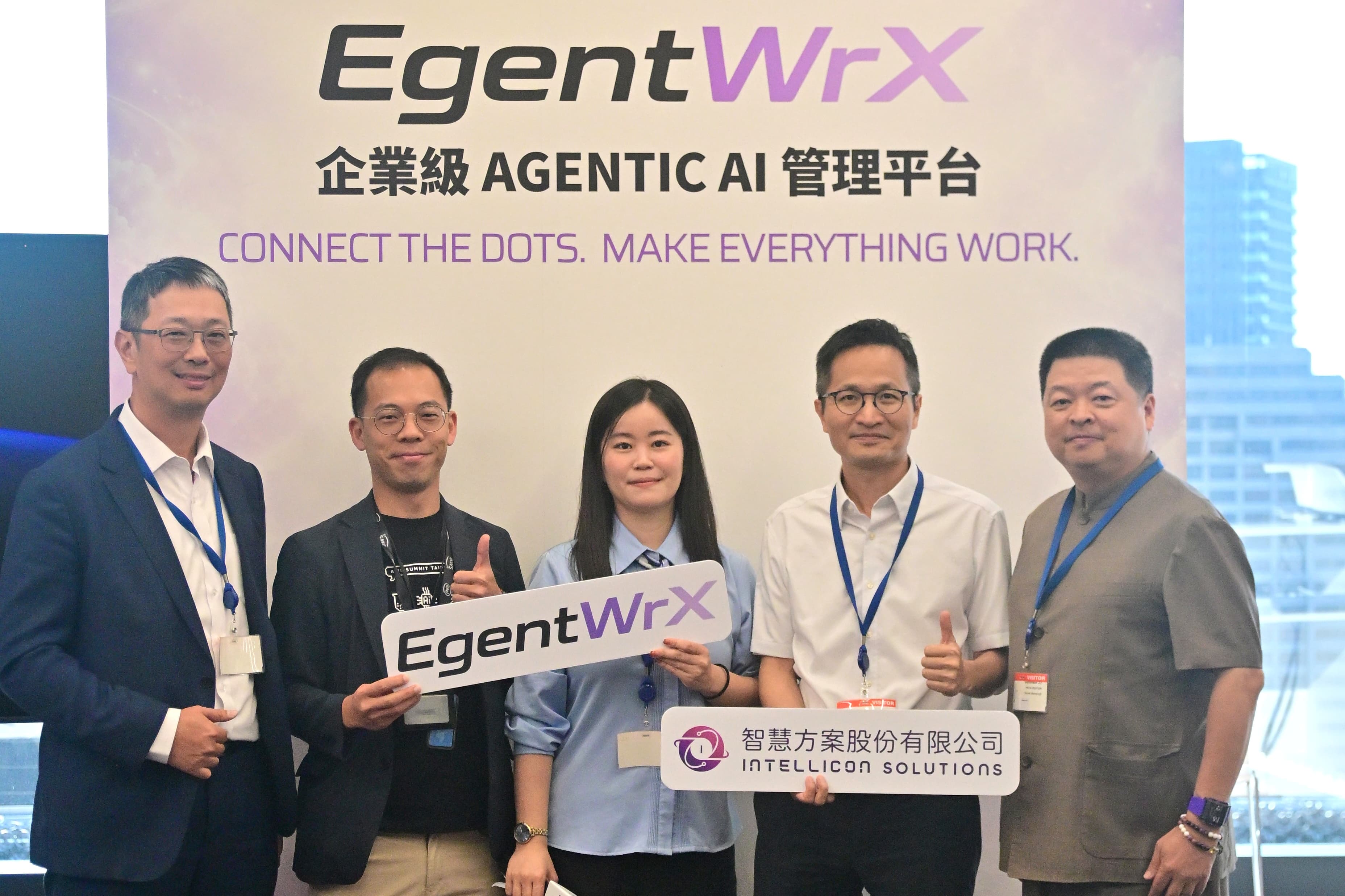
On October 28, Business Next published an article by reporter Fu Wan-chi, “Traditional Industries Push for AI Transformation: How Can They Address Labor Shortages and Data Integration Challenges? AIDC and Ya Tung Ready Mixed Concrete Discuss How to Break Through.” It is the first article in the special report “Concrete Sells for Just NT$1.5 per Kilogram. Why Are Even Japanese Companies Coming to Learn? Inside Four Traditional Businesses’ AI Transformations.” The report draws on visits to Intellicon Solutions, Ya Tung Ready Mixed Concrete, Aerospace Industrial Development Corporation (AIDC), Fwusow Industry, Hwa Hsia Glass, and BCG X to examine two of the most common challenges traditional industries face when adopting AI: labor shortages and data foundations.
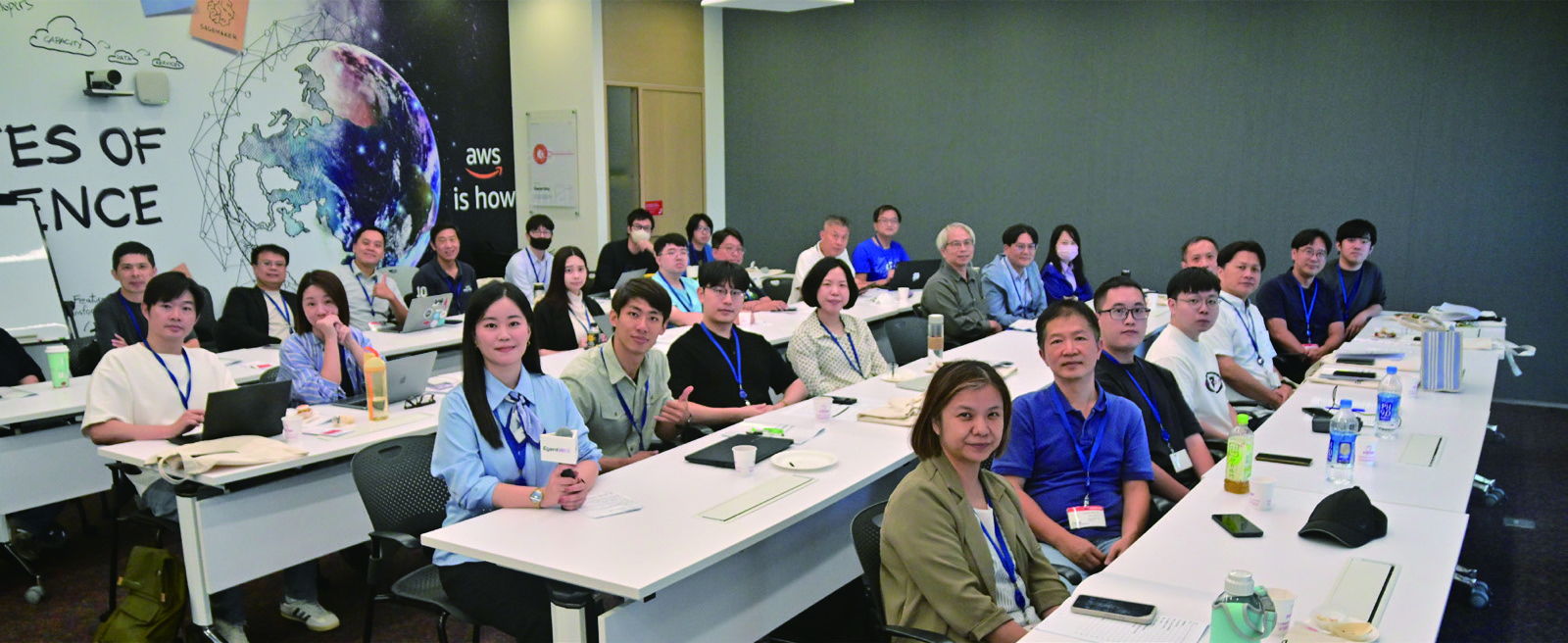
▲ Intellicon Solutions conducts an AI workshop with participants from businesses.
Labor Shortages Are Both a Driver and a Barrier
When ChatGPT was launched in late 2022, most businesses in traditional industries could not yet see where they could use it. Today, AI applications have moved beyond offices and into factories, where they help fill production-line staffing gaps, pass on experienced workers’ expertise, and analyze machine data.
The report notes that the factor driving traditional industries to adopt AI is often the same one holding them back: labor shortages. As skilled workers with decades of experience retire, new hires cannot take over quickly or consistently enough, leaving companies with little choice but to accelerate technology adoption. Yet businesses in traditional industries already have small IT teams and struggle to compete with the semiconductor and high-tech sectors for talent. Even when production lines collect large amounts of data, there may be no one available to use it. External consultants face gaps in industry knowledge, while off-the-shelf solutions often struggle to address the core problems.
Relying on Large Numbers of Workers No Longer Works
Founded two years ago, Intellicon Solutions has built a client base of more than 200 manufacturers. Its Chief Operating Officer, Claudia Chen, regularly visits factories in central and southern Taiwan. She has observed that many companies previously kept costs down by dividing work into small, simple, lower-paid tasks and assigning them to many people working simultaneously. For example, a customer complaint report might be divided into eight sections, with eight people each writing one section before a supervisor consolidates them.
Young people today have little interest in this kind of monotonous work. An AI Agent dedicated to writing customer complaint reports can produce the entire report directly, also saving the time spent coordinating and consolidating the individual sections. This both fills staffing gaps and improves efficiency.
Determining which tasks are suitable for AI and which are not yet suitable requires input from people with AI expertise. Chen recommends that companies start by looking for tasks at the intersection of three characteristics: they are time-consuming, highly repetitive, and performed by many people.
First, Get Everyone Speaking the Same Language
AI talent is difficult to recruit, so many companies choose to develop their existing employees first. They subsidize AI tools, bring in consultants to run courses and workshops, and even organize two-day, one-night training camps. These efforts help employees understand the AI goals set by management before the companies select members for their initial implementation teams.
Since 2022, Ya Tung Ready Mixed Concrete has collected more than 1,600 employee proposals for process improvements, with the adoption rate rising to 80%. General Manager Chin Chung-jen said that the IT department and the general manager’s office have only five to seven dedicated staff members combined. Transformation therefore requires participation from all employees, who must identify the actual difficulties they encounter at work. This year, Ya Tung Ready Mixed Concrete also recruited an AI engineer through an industry-academia partnership with the National Taiwan University of Science and Technology.
Fwusow Industry has more than 600 employees, many with long tenure; those with more than 20 years of service may account for over half of its workforce. The company retains employees beyond retirement age and rehires retirees to pass their experience on to new employees. Hwa Hsia Glass has organized a large volume of documents into a knowledge base called the “Glass Bible,” which new employees can consult with questions at any time. Hinge manufacturer Shin Zu Shing also continues to expand its internal knowledge base to preserve manufacturing knowledge and accelerate training for new employees.
Data Can Come from Machines and the External Environment
The report cites a survey by the Digital Transformation Institute of the Institute for Information Industry: more than 65% of Taiwanese manufacturers have adopted ERP, but only 20.7% have adopted MES, and more than 70% of factories still lack network-connected machines on their production lines. A mix of old and new equipment, difficulties integrating data across machines, and the high cost of implementing centralized data platforms all make it difficult for traditional industries to use data effectively.
AIDC’s “AIxWARE Smart Manufacturing Platform” has helped dozens of small and medium-sized enterprises upgrade their operations. Fang Yi-ting, director of the IT department, noted that unless equipment is too old, parameters can be extracted from most machines by parsing their controllers’ network packets, without installing additional sensors. Language models can then be used to interpret experienced workers’ know-how, which can be combined with data on parameter adjustments, yield rates, and other factors to train models, shortening production-line changeover times and reducing testing costs.
Ya Tung Ready Mixed Concrete uses RPA to monitor more than 30 external indicators, including construction starts and the floor area covered by issued building permits, the number of rainy days, Taiwan Power Company’s operating reserves, oil prices, coal prices, and reservoir water storage levels. These all affect construction progress, transportation, and raw material costs. Collecting this information online manually used to take three days; it now takes about 15 minutes.
People Are the Key to Transformation
The “2025 Survey Report on AI Adoption in Manufacturing” shows that 39.1% of Taiwan’s information and communications technology businesses have reached the implementation validation or scaling stage, compared with only 22.7% of traditional manufacturers. Another 45% of traditional manufacturing businesses remain at the “unknown” stage. Amid pressure from tariffs, exchange rates, inflation, carbon fees, and energy costs, the ability to use new technologies effectively is already affecting international competitiveness.
Wu Hsueh-lin, head of BCG X in Greater China, believes that the level of digitalization in traditional industries is not necessarily the biggest constraint; management’s understanding and support matter more. A lack of data can still be addressed, but if managers do not consider AI important, manufacturing supervisors will have little motivation to advance it. His conclusion is that people, not AI, are at the core of AI transformation.
Read the original article: Traditional Industries Push for AI Transformation: How Can They Address Labor Shortages and Data Integration Challenges? AIDC and Ya Tung Ready Mixed Concrete Discuss How to Break Through | Business Next