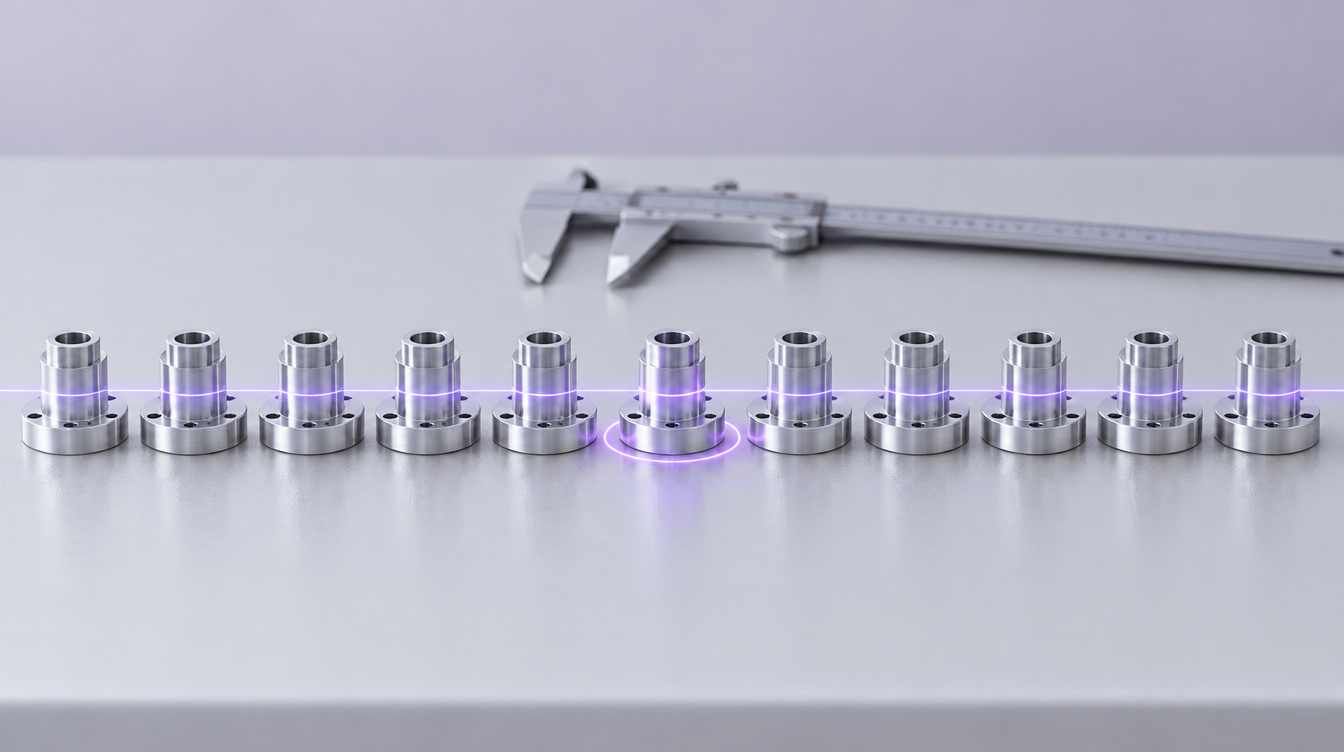
On the same production line, senior engineers can often tell at a glance whether a wrinkle, shadow, or positional shift is a normal variation in the material or a genuine defect that will affect quality. However, if this judgment exists only in the experience of a few employees, quality inspection standards can easily change whenever shifts rotate, production moves to another line, packaging is redesigned, or personnel change. Even after introducing AI visual inspection, a company may simply be asking the model to repeatedly apply inconsistent judgments.
Implementation teams should first translate on-site expertise into reviewable, repeatable rules before deciding how the model will use images. According to TechOrange, systems used by Procter & Gamble and Siemens learn the normal deformation patterns of flexible materials and identify defects in real time at the production-line edge. Samsung SDI, meanwhile, combines AI with X-Ray technology to detect metallic foreign objects and structural defects inside batteries. Although these cases use different inspection methods, their on-site decisions must all account for materials, product structures, and process conditions. Companies must also continuously manage updates to both rules and models.
First, Turn How Senior Engineers “Look” into Verifiable Rules
When on-site personnel say, “This wrinkle is acceptable,” the implementation team should ask follow-up questions: Which areas did they examine? How did they rule out glare? Under what conditions would they change the decision? Whom would they consult if the image were unclear? These questions break intuition down into observable conditions and reveal differences in how shifts or facilities classify the same defect. If the team skips this step, the labeling process may appear complete while actually embedding conflicting standards in the same dataset.
When documenting the rules, start with four categories: which images and process information are included in the input data; how the decision criteria distinguish normal deformation, genuine defects, and cases requiring confirmation; which defect categories and rationales should appear in the output; and which roles are responsible for handling exceptions. The rules should include positive examples, negative examples, and easily confused boundary cases so that labelers understand the reasoning behind each decision rather than merely copying the label from the previous image.
Before approving a pilot, managers should conduct spot checks to determine whether employees with different levels of experience and from different shifts can reach consistent conclusions using the same rules. If disputes remain concentrated in a few scenarios, quality, process, and equipment personnel should first align on the definitions. These cases should temporarily be routed for human judgment rather than prompting the team to rush into expanding image collection or deployment.
Every Decision Must Leave a Traceable Record
The role of AI vision will gradually expand from intercepting defects to tracking quality changes and identifying the causes of process anomalies. To support this, inspection records should include the original image, product or batch identifier, inspection time, equipment and production line, defect category, decision rationale, human review result, exception-handling method, and any potentially related process stage. These fields allow teams to verify the basis for a past decision and determine whether quality changes coincided with equipment adjustments, differences in raw materials, or environmental changes.
Retaining more data does not necessarily mean the cause of an issue will be traceable later. Companies must first confirm that their systems can be connected through consistent batch, work order, or product identifiers, and they should define minimum requirements for image quality and field completeness. When edge computing is used on high-speed production lines, teams must also measure the time required on-site for image capture, analysis, decision-making, and rejection. If the system will connect to a programmable logic controller (PLC), teams should test how timeouts, disconnections, and cases requiring confirmation will be handled.
Acceptance criteria should therefore cover not only over-detection and missed detections, but also the proportion of cases requiring confirmation, the reasons for human overrides, unusable images, and whether inspection results can be matched to process records. The project owner can begin with one complete shift and review each record from image intake through human verification. After identifying missing fields, incorrect identifiers, and untraceable decisions, the team can determine whether to expand the pilot.
Model Updates Need Owners, Versions, and Release Criteria
Having on-site engineers participate in labeling and updates can help the system adapt as products and processes change. However, self-management still requires clearly defined authority and accountability. Companies can divide the workflow into data collection, labeling review, update assessment, pilot validation, and production deployment, then assign an owner, required inputs, completion criteria, and approver to each stage. Changes to rules affect labeling standards, while production deployments affect decisions on the production line. Both stages are therefore well suited to human approval.
Each update should also retain a version history that records, at a minimum, the reason for the change, the rule version used, the affected products or production lines, who completed the validation, who approved the release, and how to roll back to the previous version if problems arise. If a model performs inconsistently under certain material, lighting, or equipment conditions, the team should document those limitations in its scope of application and route out-of-scope cases to personnel for confirmation. This approach allows on-site teams to continue improving the rules without letting unvalidated changes enter production workflows.
Before approving an update, managers should require the team to present the error types before and after the change, records of human overrides, and results from boundary-case testing. They should also confirm that the rollback procedure has been tested. If the team cannot clearly explain what changed, who is responsible, or how to restore the previous version, the release should be paused until the records are complete and the update can be reviewed again.
Start by Turning High-Frequency Scenarios into AI Skills
The first pilot should focus on an inspection scenario with a high decision frequency, relatively stable rules, and readily available human review. The implementation team should first ask on-site engineers to define the input data, decision criteria, output format, and exception-handling process, then organize these established practices into an AI Skill. Human judgment should remain in place during the pilot, with the reasons for every disagreement recorded individually. Once the rules have stabilized, the team can evaluate similar products and other production lines in sequence. During the first phase, the existing quality inspection standards of the original facility should remain unchanged.
EgentWrX enables companies to encode senior employees’ established judgments as AI Skills, allowing an AI Agent to apply the same rules whenever the relevant conditions are met. Skills created by employees must be reviewed before they can be rolled out across the company. Companies can also turn data collection, labeling review, update assessment, and production deployment into tasks and workflows, with human approval required at handoff points so that designated personnel must confirm the work before it proceeds to the next stage.
At the end of the pilot, managers should verify that different employees can apply the rules consistently, that every exception has a clearly defined destination, and that every change has a version and approval record. Only after all three conditions are met should the skill be expanded to other production lines. If any part of the process still depends on verbal instructions, the workflow should first be completed to avoid presenting the experience of a few individuals as a company-wide standard.
FAQ
Can we get started if we do not have enough on-site images?
You can begin by documenting the rules and taking inventory of the available images. The team should first confirm that the existing images cover normal deformation, genuine defects, and boundary cases, then ask on-site engineers to add the rationale behind each decision. If there is insufficient evidence for a particular scenario, it should remain subject to human judgment while the team continues collecting data.
Who should be responsible for the labeling rules?
The quality or process manager should own the rules, senior engineers should provide the basis for decisions, and the IT and AI teams should implement the rules in the data and workflows. When departments disagree, the designated business owner should make the final decision and record the rationale in the version history.
How often should the inspection model be updated?
The timing of updates should be determined by changes in products, materials, equipment, or error patterns. Teams can periodically review human overrides and cases requiring confirmation, but every update must undergo boundary-case testing, receive approval from designated personnel, and include a tested procedure for rolling back to the previous version.
How can we determine whether a pilot is ready to expand to other production lines?
First, confirm whether the materials, equipment, lighting, and quality inspection definitions on the other production lines are sufficiently similar. Even when the product name is the same, the rules must be revalidated using local images and on-site personnel. If the differences would change the decision criteria, create a new version of the skill and submit it for review again.
References
- P&G Tests Tissue Products, Samsung SDI Inspects Metal Inside Batteries: How Is AI Vision Overcoming the Blind Spots of Traditional Optical Inspection? — TechOrange summarizes AI visual inspection applications at Procter & Gamble, Siemens, and Samsung SDI.